


Priya remembers the exact evening it started making sense. She had just finished dinner with her family, nothing unusual, nothing stressful, and yet within twenty minutes her stomach had knotted up, her chest felt tight, and a familiar wave of restlessness crept in. She was not thinking about work. She was not worried about anything in particular. Her mind, in fact, felt strangely blank. Yet her body stayed in a constant state of high alert.
For months, she had treated the bloating and the anxiety as two separate problems, one for her physician, one for her own willpower. It never occurred to her that the two might be having a conversation she could not hear.
That topic to focus on is the gut-brain axis. And for a growing number of people quietly living with anxiety that does not always trace back to a clear emotional trigger, understanding it may be the missing piece.
What Is the Gut–Brain Axis?
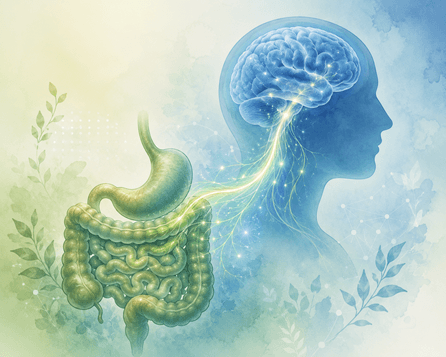
The gut and the brain are often treated as two unrelated systems, one handles digestion, the other handles thought and emotion. In reality, they are in constant, two-way conversation, exchanging signals through nerves, hormones, and immune messengers every moment of the day, whether you’re aware of it or not.
Researchers call this communication network the gut-brain axis, and it works in both directions. Stress and emotion can change how the gut moves, secretes, and absorbs. Just as importantly, what’s happening inside the digestive tract, how balanced its bacteria are, how inflamed its lining is, how efficiently it is working, can shape mood, stress reactivity, and mental clarity.
This is not a fringe idea. Cryan and Dinan’s influential 2012 review helped bring the gut-brain axis into mainstream scientific conversation, describing how gut microorganisms can influence brain chemistry and behaviour. Since then, research summarised by Carabotti and colleagues in 2015 has mapped out the specific pathways, neural, hormonal, and immune, that link the two organs. The takeaway for someone like Priya is simple: her anxious evenings weren’t purely “in her head.” They may have been, quite literally, in her gut.
Why Your Gut May Be Affecting Your Anxiety
To understand how this plays out day to day, it helps to look at the individual mechanisms involved. None of them work in isolation, they overlap and reinforce one another, which is part of why gut-related anxiety can feel so persistent.
The Gut Microbiome
Inside your gut lives a vast community of trillions of microorganisms, collectively referred to as the gut microbiome. Far from being passive residents, these microbes help digest food, regulate immune activity, and produce compounds that influence brain function.
When this microbial community is in balance, it tends to support steady mood and resilient stress responses. When it is disrupted, through poor diet, chronic stress, antibiotics, or irregular eating patterns, a state called dysbiosis can develop. Foster and colleagues, writing in 2017, described how shifts in gut bacteria have been associated with anxiety-like patterns in research settings, adding weight to the idea that a healthy gut community is not just a digestive asset but potentially an emotional one too.
The Vagus Nerve
If the gut and brain have a direct telephone line, it is the vagus nerve. This long nerve runs from the brainstem down through the chest and into the abdomen, carrying signals in both directions but interestingly, most of its fibres transmit signals from the gut to the brain.
That means much of what your digestive system experiences , comfort, irritation, inflammation, fullness , is being reported back to your brain continuously. A vagus nerve that is well-toned and responsive tends to support what’s known as the parasympathetic nervous system: the “rest-and-digest” state associated with calm, steady breathing and efficient digestion. When vagal tone is poor, the body may lean more heavily on its sympathetic, “fight-or-flight” mode, even when there’s no obvious threat in sight.
Inflammation
Inflammation helps the body heal after injury or fight infection. But when it becomes chronic and starts in an unhealthy gut, it can spread beyond the digestive system. Inflammatory signals travel through the bloodstream and can influence the parts of the brain that regulate mood and emotions.
Neurotransmitters
Here’s a detail that surprises most people: a significant portion of the body’s serotonin , the neurotransmitter most associated with mood stability , is produced not in the brain, but in the gut. The digestive tract is also involved in the production and regulation of other compounds that influence how calm or reactive the nervous system feels.
This does not mean digestive serotonin travels directly to the brain in the way a supplement would. Rather, it reflects how deeply intertwined gut function is with the broader signalling systems that shape emotional regulation.
Digestive Health & Emotional Well-being
Put these threads together and one can see the pattern of health. A gut that digests food efficiently, hosts a balanced microbiome, maintains a calm inflammatory state, and communicates smoothly through the vagus nerve tends to support a nervous system that can regulate stress well. A gut under strain often struggles to do the same and the person carrying that strain may feel it as anxiety, irritability, or a sense of being perpetually “on edge,” before they connect it back to digestion.
Signs Your Gut May Be Influencing Your Mental Health
Not every case of anxiety has a digestive root, and this isn’t a substitute for a proper medical evaluation. But certain patterns are worth paying attention to. You may want to explore the gut-brain connection further if you notice:
- Anxiety that tends to flare up alongside bloating, acidity, or stomach discomfort
- Irregular bowel habits that seem to track with stressful periods
- An increase in digestive discomfort during weeks of emotional or mental stress.
- Persistent fatigue or “mental fog” alongside digestive complaints
- Sleep that feels disrupted despite no obvious cause
- A general sense of emotional reactivity that seems tied to how your stomach feels that day
If several of these sound familiar, it may be worth looking at digestive health as part of a broader anxiety-management plan, rather than addressing the mind and the gut as separate projects.
How Naturopathy Supports the Gut–Brain Axis

Conventional anxiety care often focuses, understandably, on the mind, therapy, medication, lifestyle counselling. Naturopathy approaches the same concern from a different angle, starting with the physiological environment the nervous system exists within.
Rather than isolating anxiety as a purely psychological event, a naturopathic evaluation looks at digestion, circulation, inflammation, sleep, and stress physiology as interconnected pieces of one picture. The underlying premise is that when the body’s internal environment is calmer and better regulated, the nervous system has more capacity to respond to stress in a measured way rather than a reactive one.
This is where an integrative healing environment, drawing on therapies refined over decades of naturopathic and yoga-based practice, becomes particularly relevant, not as a single treatment for anxiety, but as a structured program that addresses several contributing factors at once.
JNI’s Integrative Approach
Jindal Naturecure Institute’s approach to gut-brain wellness does not rely on any single therapy working in isolation. Instead, a structured naturopathic program brings together several complementary interventions, each addressing a different layer of the gut-brain relationship.
Hydrotherapy
Water-based therapies, including neutral immersion baths with Epsom salt, spinal baths and sprays, jet hydrotherapy, and hot-and-cold hip baths, are used with a specific physiological goal: encouraging the body out of sympathetic overdrive and into a calmer, parasympathetic state. Temperature contrast and gentle water pressure stimulate circulation and are believed to support vagal tone, which in turn may help both digestion and emotional regulation settle into a steadier rhythm.
Colon Therapies
Therapies such as colon hydrotherapy, supervised enemas, and abdominal or wet girdle packs are used to support bowel regularity and reduce the toxin burden that can accumulate with sluggish digestion. The reasoning is straightforward: a digestive tract that is congested or irregular is more likely to sit in a state of low-grade irritation and addressing that directly can ease one of the physical contributors to gut-related anxiety.
Mud Therapy
Mud applications, full-body, partial, or targeted to the spine, are valued in naturopathy for their cooling and anti-inflammatory qualities. Applied to the abdomen or spine, mud therapy is thought to help calm an overactive digestive-inflammatory response, offering the body a period of physiological “cooling down” that complements the more active detoxification therapies.
Yoga & Breathwork

Individual yoga sessions form one of the more direct interventions for gut-brain balance, and for good reason. Certain postures gently stimulate abdominal organs and support gastrointestinal motility, while slow, diaphragmatic breathing practices directly engage the vagus nerve, nudging the body toward a relaxation response. Over time, a consistent breath and movement practice may help lower circulating stress hormones and build greater emotional resilience, not as a one-time fix, but as a trainable skill.
Relaxation Therapies
Deeply calming treatments such as Shirodhara , a continuous, gentle stream of warm oil across the forehead, along with Shirolepa, rejuvenating therapies, and lymphatic and deep tissue work, are used to support neuroendocrine balance. These therapies work on a different register than the more physical hydrotherapy or colon treatments: their primary contribution is helping the nervous system unwind deeply enough that digestive and emotional regulation can follow.
Diet Therapy
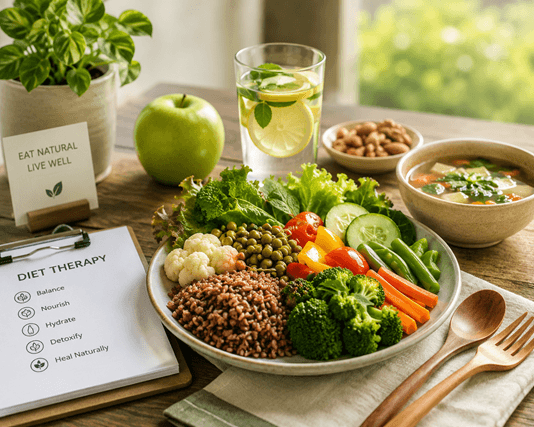
None of the above therapies work particularly well on top of a diet that keeps stressing the gut. A tailored, whole-food approach, rich in fibre, free of unnecessary processed inputs, and paced to avoid overloading digestion, gives the microbiome the raw material it needs to stay balanced. Diet therapy is less about restriction and more about giving the gut the conditions it needs to repair itself.
Together, these interventions are not meant to function as isolated treatments. A holistic treatment plan typically sequences and combines them, so that hydrotherapy calms the nervous system enough for digestive therapies to be effective, while yoga and diet changes build a foundation that sustains the improvement long after a single session ends.
Simple Daily Habits to Support Your Gut–Brain Connection
You do not need to be at a wellness centre to start supporting this connection. A few consistent habits can make a meaningful difference over time:
- Eat at regular times, and avoid rushing meals, digestion begins with how calmly you eat, not just what you eat
- Include fibre-rich, whole foods that feed a diverse gut microbiome
- Practise a few minutes of slow, deep breathing, particularly before or after meals
- Prioritise consistent sleep timing, since disrupted sleep affects both gut motility and stress hormones
- Notice patterns , keeping a simple note of when digestive symptoms and anxious feelings coincide can reveal connections worth discussing with a practitioner
- Limit late-night eating, which can interfere with both digestive rest and sleep quality
None of these habits work like a switch. They tend to show their benefit gradually, in the form of steadier energy, fewer digestive flare-ups, and a calmer baseline mood.
Who May Benefit?
This integrative approach to the gut-brain axis tends to resonate most with people who feel like they have already tried addressing their anxiety “from the neck up” without lasting results. It may be worth exploring if you’re someone dealing with chronic stress alongside digestive symptoms such as bloating, acidity, or irregular bowel habits , or if you have noticed that your gut and your emotional state seem to rise and fall together. Wellness-minded individuals looking for a preventive, whole-body approach, and families exploring naturopathy as a complement to existing care, may also find this framework useful.
It’s worth noting that this is a supportive, physiologically grounded approach rather than a replacement for psychiatric or psychological care where that is needed. The two can, and often do, work well alongside each other.
Key Takeaways
The gut and brain are in constant, bidirectional communication through the vagus nerve, the microbiome, immune pathways, and neurotransmitter production. Digestive imbalance , including dysbiosis, inflammation, and impaired nutrient absorption , can influence anxiety and stress reactivity. A naturopathic, whole-body approach that combines hydrotherapy, digestive therapies, mud therapy, yoga, and dietary guidance addresses several of these contributing factors together, rather than treating anxiety as an isolated mental event.
Conclusion
Priya’s evenings didn’t change because she found a single solution. They changed gradually, as her digestion settled, her breathing practice became a habit, and her body slowly relearned what it felt like to be calm after a meal instead of on alert. The gut-brain axis does not offer a quick fix, but it does offer something arguably more valuable: a fuller picture of where anxiety can come from, and a broader set of tools , beyond the mind alone , for addressing it.
If your own anxious moments seem to follow your digestion more often than they follow your calendar, that pattern may be worth paying attention to. A structured naturopathic evaluation can help identify whether your gut is part of the story , and, if so, offer a path toward addressing it at the root.
If digestive discomfort and anxiety have been showing up together in your life, a personalised consultation can help identify where to begin.
Frequently Asked Questions
Can gut health really affect anxiety?
Emerging evidence suggests a strong link between digestive function and emotional regulation, largely through the vagus nerve, the gut microbiome, and inflammatory pathways. While gut health isn’t the sole cause of anxiety, research indicates it can be a meaningful contributing factor for many people.
What is dysbiosis, and how is it connected to anxiety?
Dysbiosis refers to an imbalance in the gut’s microbial community. Studies indicate that this imbalance may influence neurotransmitter signalling and stress hormone activity, which is why restoring microbial balance is often a focus of gut-directed anxiety care.
How does naturopathy help with gut-related anxiety?
Naturopathic care typically combines hydrotherapy, digestive detoxification therapies, mud therapy, yoga, and dietary guidance to support the body’s parasympathetic response and reduce systemic inflammation, addressing several physiological contributors to anxiety at once.
Is this approach a replacement for anxiety medication or therapy?
No. This is a complementary, whole-body approach that may support existing psychological or psychiatric care, not a substitute for it. Anyone on medication or in active treatment should continue working with their treating physician.
How long does it take to notice a difference?
This varies significantly from person to person, depending on the severity of symptoms and consistency of practice. Many people report gradual improvements in digestion and stress resilience over several weeks of consistent therapy and lifestyle changes, rather than immediate results.